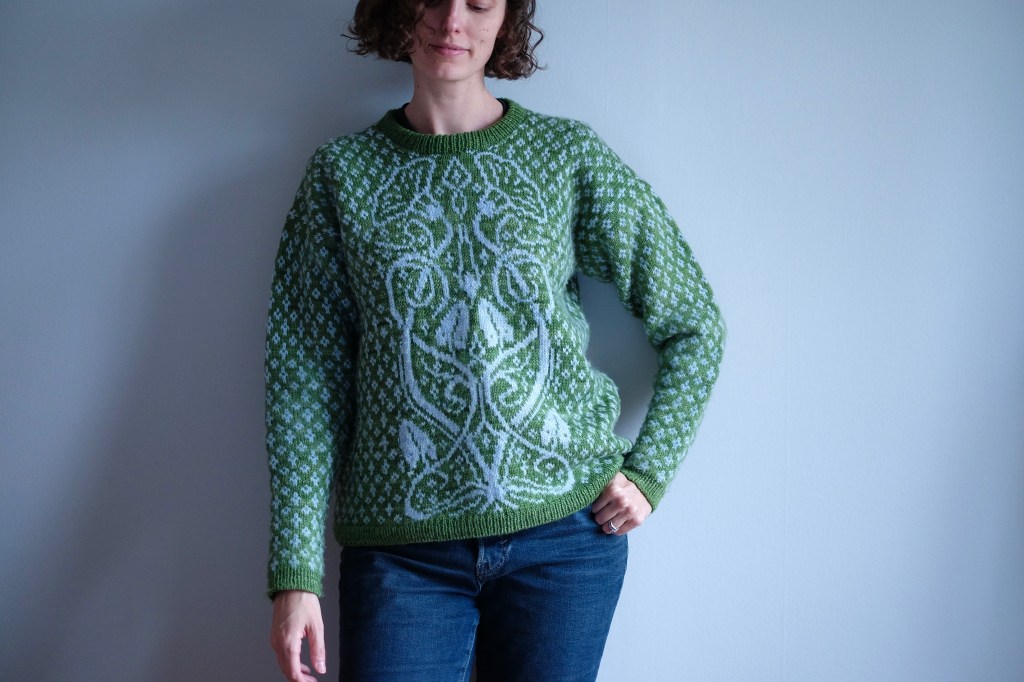
Here comes another finished project from last year, and one I did share as WIP on the blog: my Hedgebind, by Marina Skua! (Ravelry pattern link). I actually finished this sweater back in July, but it took some time for me to get it blocked, and it took even longer to get photos of it. I dragged my feet a little bit on that, which I will get into, but first a few details…
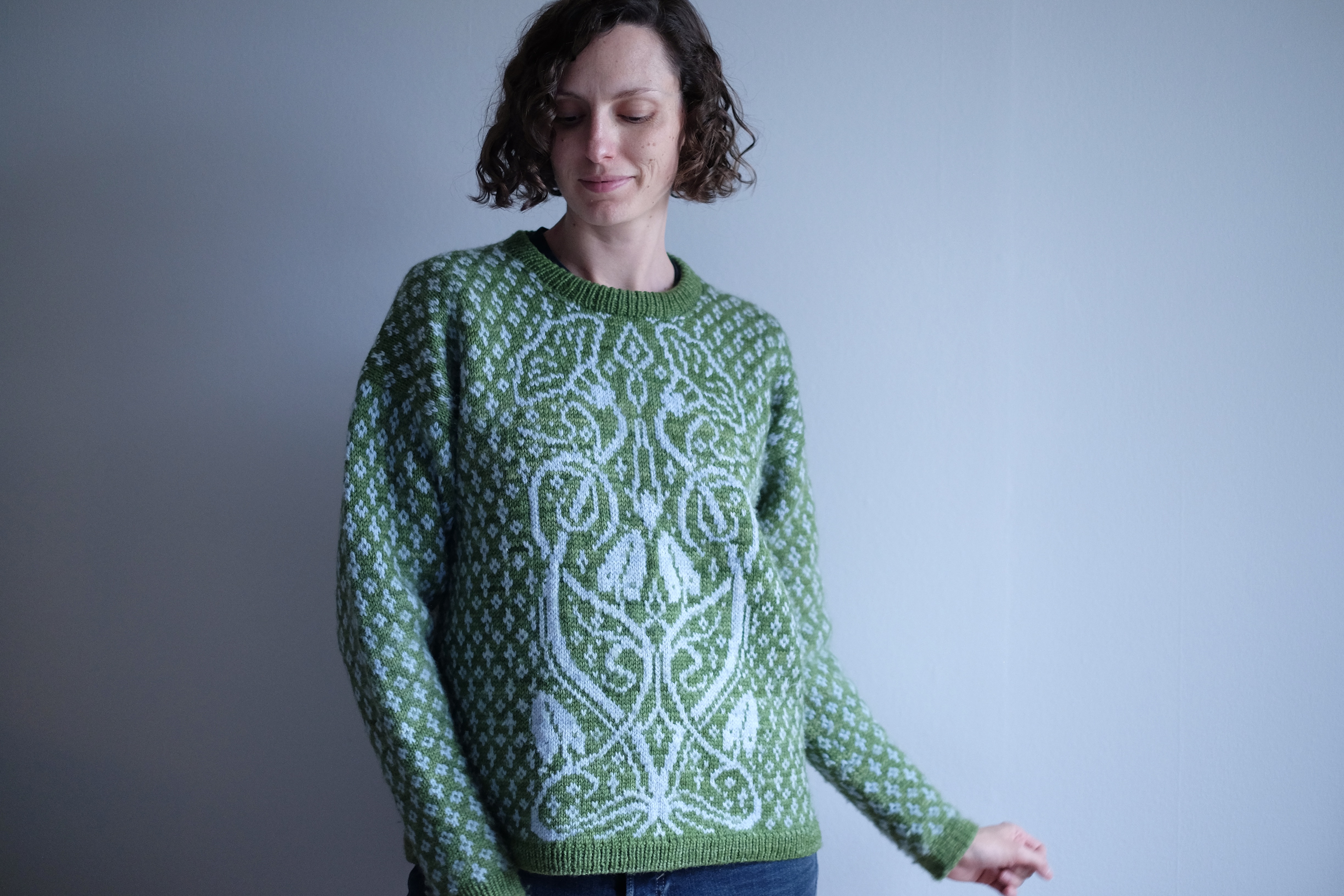
Marina’s sample of this pattern uses worsted spun non-superwash wool from Telling Yarns. I liked the look of her fabric and decided I wanted to go for worsted spun yarns as well. The design is inspired by Art Nouveau book covers, especially those by Margaret Armstrong, an American book cover designer and author whose work was highly sought-after at the time. While I debated knitting this sweater in a high contrast black-and-white inspired by Norwegian colorwork (which would have felt very Per Spook), looking at some of Margaret Armstrong’s book covers convinced me I wanted to go with colors that nodded at the book covers as well.
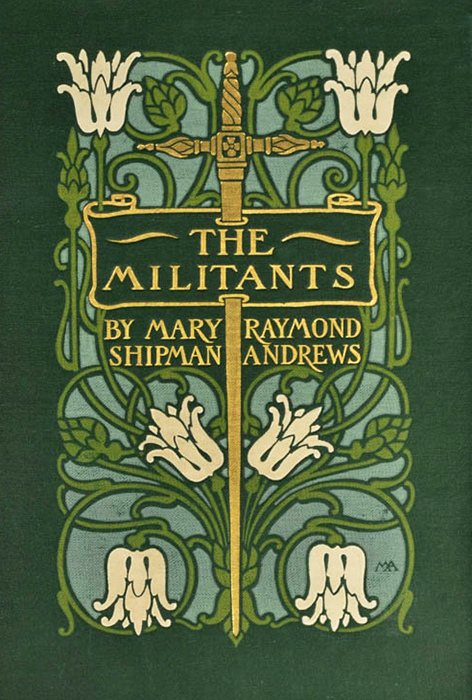
I was especially taken by this example, her cover for The Militants by Mary Raymond Shipan Andrews. If you’re interested in seeing more of Armstrong’s work, this post from the Library of Congress has some lovely examples.
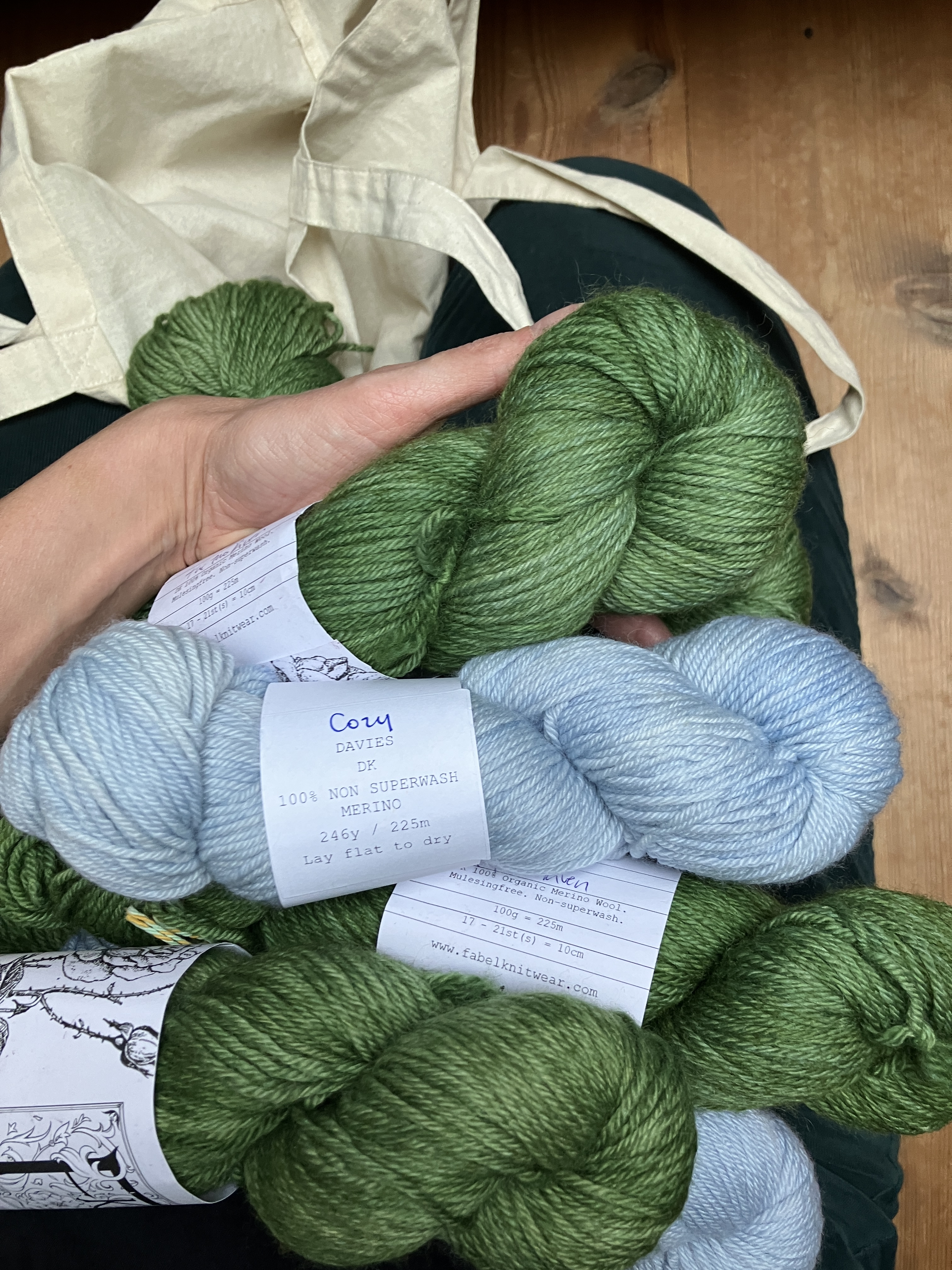
I decided a deep green and pale blue would work nicely. I had some pale blue non-superwash merino yarn dyed by Annie Paaren in my stash that I thought might work for this, and ended up ordering some Fabel Knitwear Elder for the main color, in the colorway The Two Rivers.
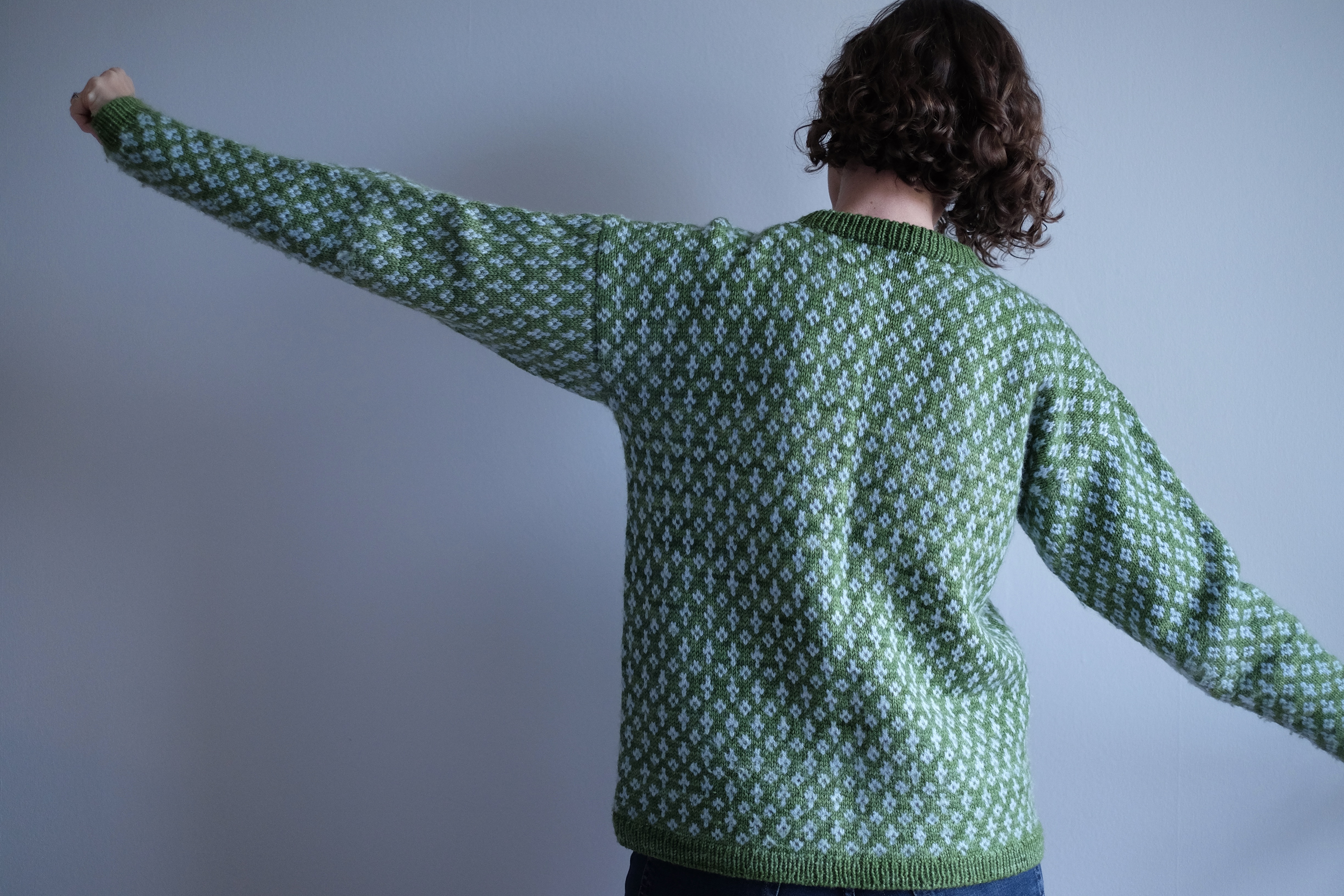
Enter hitch number one. There is always a degree of risk involved with ordering hand-dyed yarn online, and I accept that risk when I choose to do it. Still, I was pretty surprised when my order arrived and the green was much brighter and grassier than it had appeared on the website (I took these modeled photos on a particularly dark day in December and I’d say it’s brighter in real life than it appears on my screen here too). Not really the dusty, slightly faded forest green I’d been going for. I debated returning it, but ultimately I still liked the color and thought it looked really nice with the pale blue yarn, so I decided to move forward with the yarn I had.
I had an immense amount of fun knitting this sweater. I love the pattern, and working on the front panel was complex enough to hold my interest, but once you were past that chart, the rest of the round was working the smaller repeat which is easily memorized. I struggled a bit with the sleeves. I had one false start where I started with a partial skein and had a very obvious transition to the next skein (I opted not to alternate skeins, given the yarn management that would require for allover colorwork), so I had to frog back and start the sleeve with a fresh skein. I also modified the sleeve shaping, a decision I ended up regretting. My sleeve tapers more slowly than the pattern is written, which means the upper arm is pretty roomy and the forearm is relatively fitted. I think I’d be a lot happier with my sleeves if I hadn’t modified the decrease rate. That’s hitch number two.
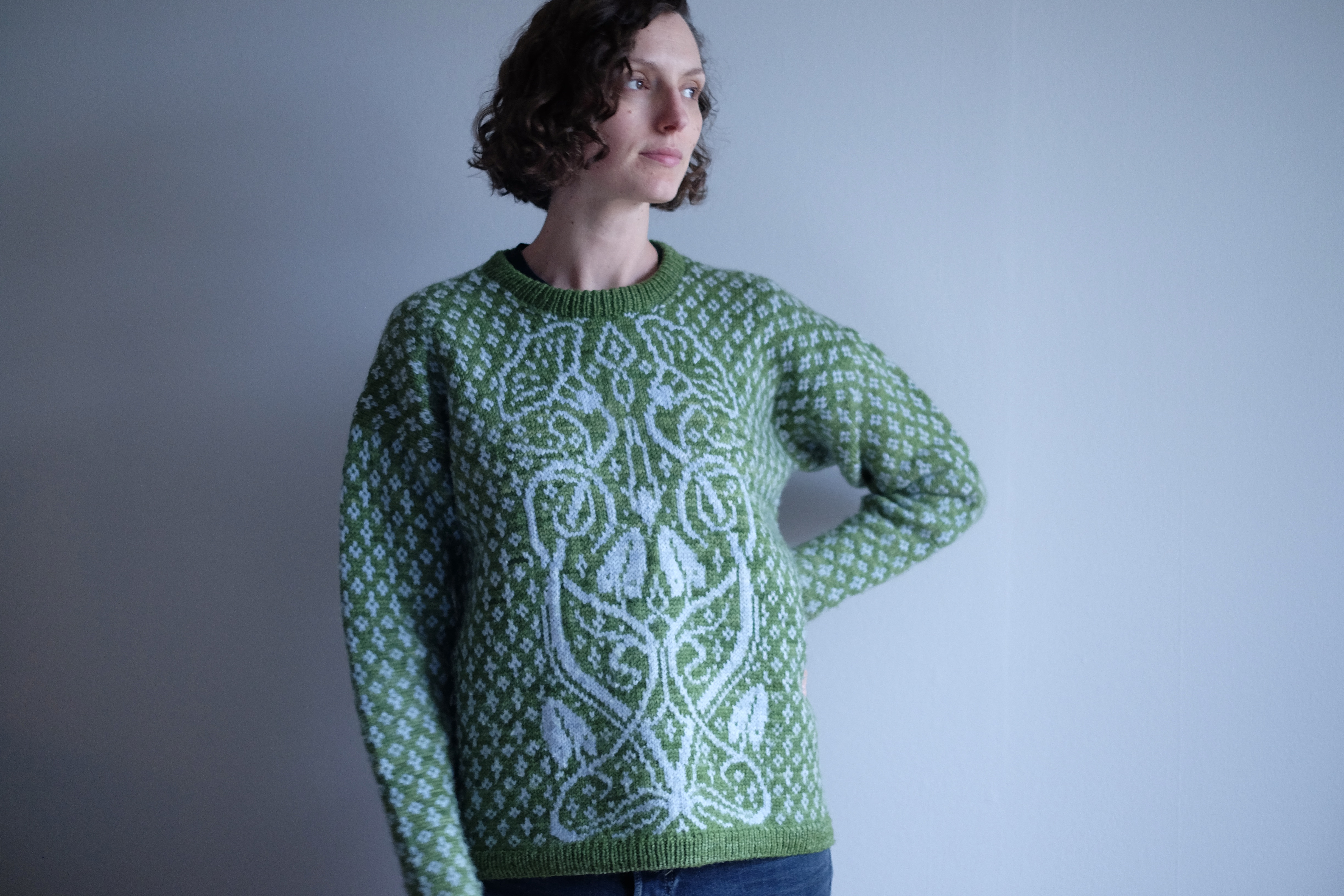
Hitch number three is that these yarns have worn extremely poorly. I knew the merino was going to pill pretty quickly, but I’m sad to say I’m really disappointed with the Fabel Knitwear Elder as well, and I won’t be ordering that yarn again in the future. I started wearing this sweater pretty regularly after it was blocked, and the sleeves in particular are in a pretty shocking state in terms of pills and fuzz. That also means I’m unlikely to frog them back and rework them as written.
The end result is a sweater that I really enjoyed knitting and that is definitely a warm and cozy cocoon on a cold day. And I do wear it! But the shortcomings mean that I still feel a lingering dissatisfaction, and I don’t love it as much as I want to. And that, I feel, is why I dragged my feet on sharing the finished project. But there are a lot of decisions that go into making a sweater, and we all make wrong choices sometimes, even as experienced knitters. And that’s important to share too!


 Paper Tiger
Leave a comment