Lately I have been thinking a great deal about the Swedish-born Norwegian textile artist Hannah Ryggen. I previously wrote very briefly about Ryggen’s work on this blog when I visited the Nordenfjeldske Kunstindustrimuseum (the Norwegian Museum of Decorative Arts and Design) back in 2019, but now seemed like a good time to revisit the work of Ryggen, a pacifist and anti-fascist whose work throughout the 20th century was often overtly political. Apropros of, well, you know.
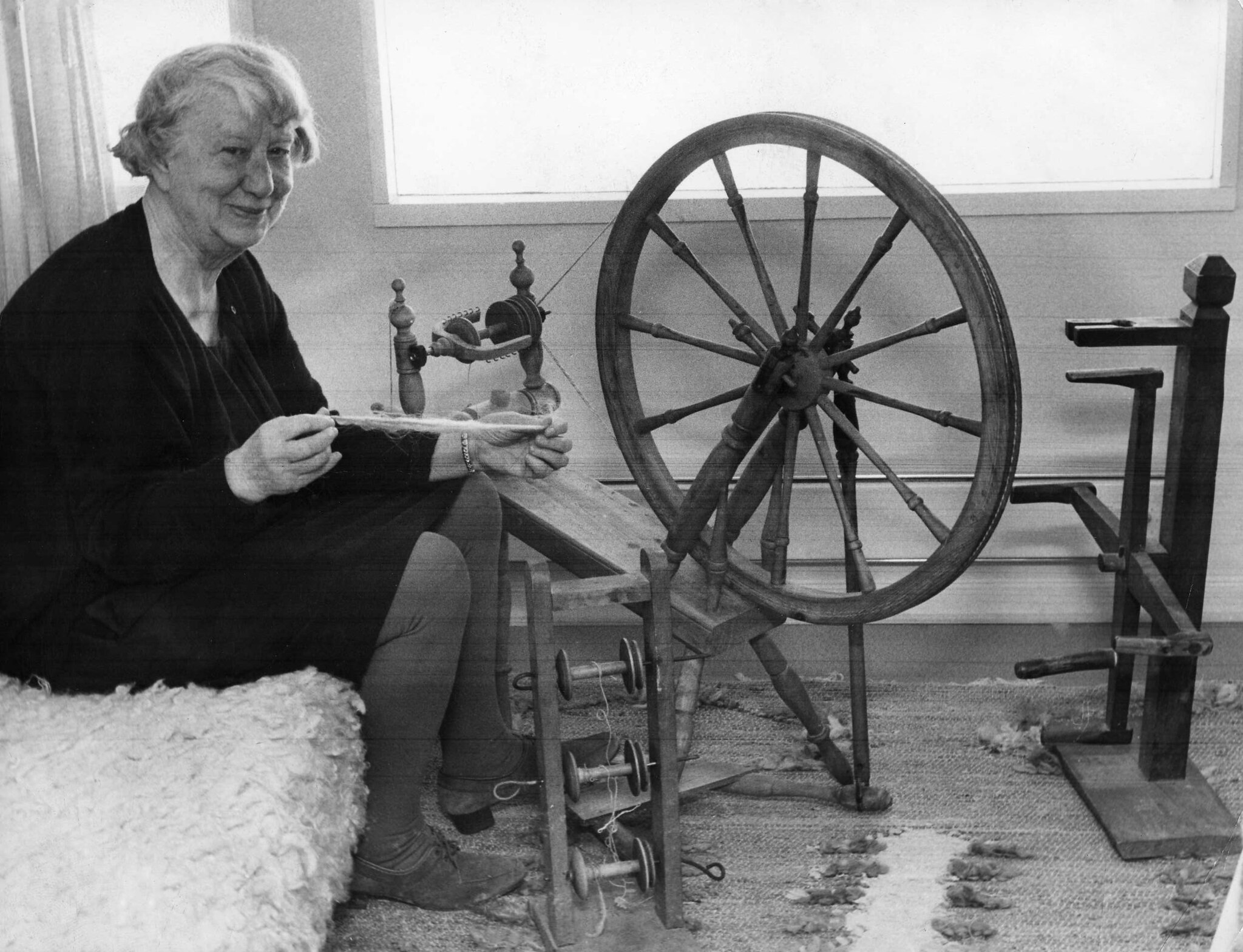
Ryggen was born in Malmö, Sweden in 1894, and she originally trained as a painter. She met her husband, painter Hans Ryggen, while studying in Dresden, and in 1923 they married and moved to Hans’ home in Ørland on the coast of Trøndelag in Norway, near Trondheim. It is here that she fully made the switch from painting to weaving, teaching herself through books since the long travel time to Trondheim at the time made attending courses impractical (while these days the speedy foot ferry can take you from Trondheim to Brekstad in an hour or less, in the 1920s it would have been an hours-long journey). Over the next several years she also built up her knowledge about plant dyeing with local materials (and gave courses on plant dyeing locally), and she kept sheep and grew flax for yarn production, hand spinning wool and linen from her own raw materials.
In her book Hannah Ryggen: Threads of Defiance, art historian Marit Paasche writes, “For Hannah Ryggen, life, art, work and politics were one, and her sensitivity to connections between people, places, politics and social conditions is manifested in her weaving and in the vast body of written material she left behind.” On Ryggen’s style, Paasche writes, “She combined international modernism with politics and folk art, and she was, in the Norwegian context, unique in transforming art into activism. Her work accommodates everything from eco-philosophical reflections and ideas about motherhood, to critiques of privilege, abuse of power and social hierarchy.”
Ryggen was undeniably an activist, but I also think her work is a reminder that while not all art is necessarily activism, craft and making are inherently political. For me, the 21st century has been characterized by a culture of overconsumption and excess, not limited to but especially present in the textile industry. I find Ryggen’s independence and control over her process when it came to her own art to be inspiring – growing flax and keeping sheep meant she produced her own raw materials, which she spun herself and dyed with local flora. The amount of skill and work that went into the creation of the materials before she even began working at the loom was immense, and her being self-taught rather than formally trained only adds to my awe and inspiration.
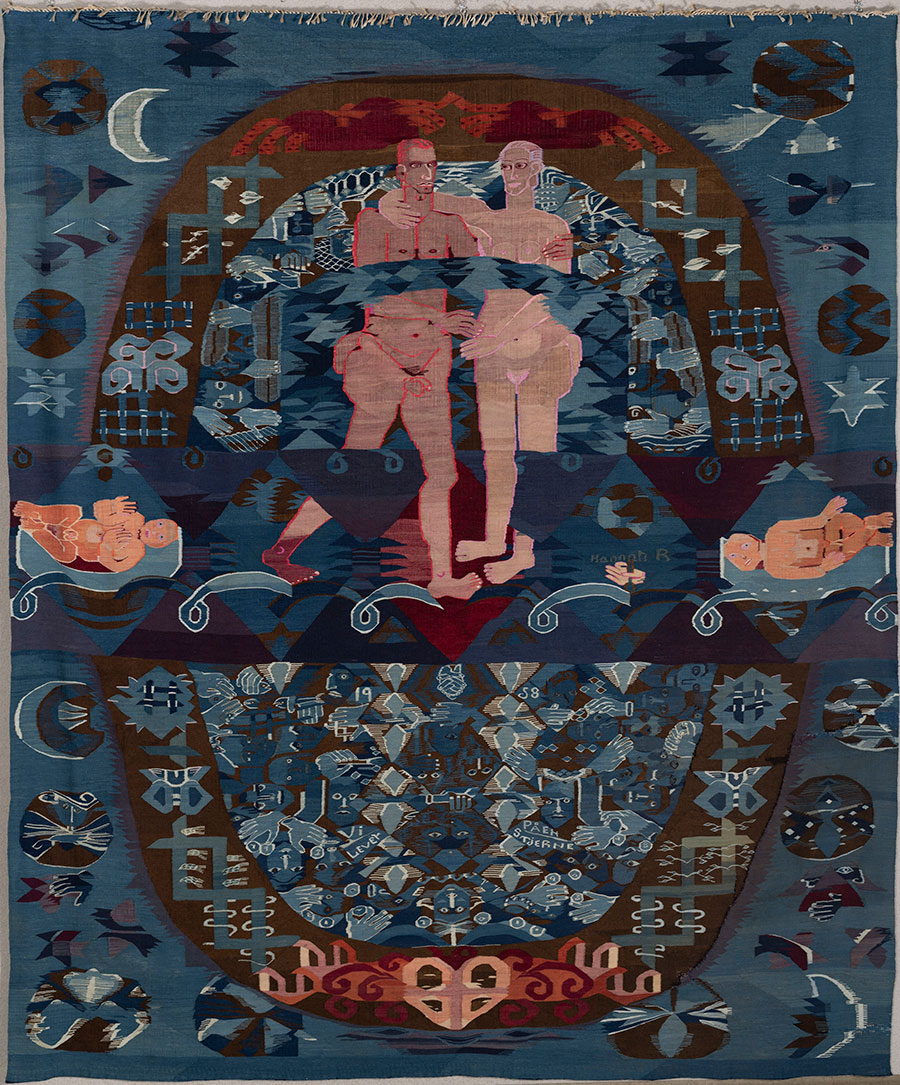
I wrote briefly about Ryggen’s monumental tapestry We Are Living on a Star several years back (and it’s included here as the featured image at the top of this post), but I thought I’d share a different one today. The tapestry 6. oktober 1942 was woven mid-war, during the Nazi occupation of Norway. The main event referred to by the title is featured in the left panel of the triptych: the assassination by the Nazis of actor and theater director Henry Gleditsch, who was the first head of Trøndelag Teater. The theater still exists today, and having been to several shows there, this event feels extremely close to home. Gleditsch used his position as head of the theater to resist the occupying forces, often through the use of subtle satire the theater was able to get past the sensors (scripts had to be pre-approved by the Nazis or their fascist collaborators before plays could be put on). Of course, if there’s one thing that fascists can’t handle, it’s being made fun of. This type of resistance was one of many that led the Nazies to declare martial law on October 6, 1942, and on the following day they rounded up a group of ten prominent local citizens who had publicly opposed the German occupation. They carried out extrajudicial executions at Falstad prison camp on October 7. Henry Gleditsch was among those executed. The executions were symbolic, meant to send the message to the general public that resistance would not be tolerated.

Ryggen’s tapestry depicts the event on the leftmost panel of the triptych. Gleditsch reels back from being shot in the head as his wife, actor Synnøve Gleditsch, kneels at his side, reaching for him. Hitler floats above with a pistol in each hand, having fired the shots that kill Gleditsch (in the tapestry, if only figuratively in reality). A Serbian prisoner of war is bound to a post behind them. The center panel features Winston Churchill standing guard over his country from a fortress tower. To the right, the Ryggen family (daughter Mona, husband Hans, and Hannah) stand in a black boat, surrounded by red roses, perhaps representing the hope found in the dream of fleeing to England to escape the occupation.
I think this is one of the works that really gets at the heart of how powerful Ryggen’s art was. While it is about the events that took place on and following October 6, it is also about the occupation and the state of Europe and the world more broadly at the same time. The history and context of this one work would be enough to fill up a book. And while there is great darkness present, depicted in Gleditsch’s execution and the looming threat of the Nazi occupation, there is also hope and the dream of an escape.
Hannah Ryggen’s works are fortunately valued as an important piece of Norwegian art history, but unfortunately many of them are also at least as relevant today as when she first made them. I can’t recommend Marit Paasche’s book Hannah Ryggen: Threads of Defiance highly enough if you’re interested in learning more about Ryggen’s life and work (also available in the original Norwegian as Hannah Ryggen: en fri). If you’d like to view more of her works, images of her tapestries can be viewed many places online (including Norway’s DigitaltMuseum), but this collection from Frieze shows a few of her specifically anti-fascist works.
Additional image credits:
Featured image: We Are Living on a Star (Vi lever på en stjerne), 1958. Tapestry woven in wool and linen, 400 x 300 cm. Collection of the Norwegian government.
Alt text for the tapestry images was adapted from Marit Paasche’s descriptions in Hannah Ryggen: Threads of Defiance.


 Paper Tiger
Leave a comment